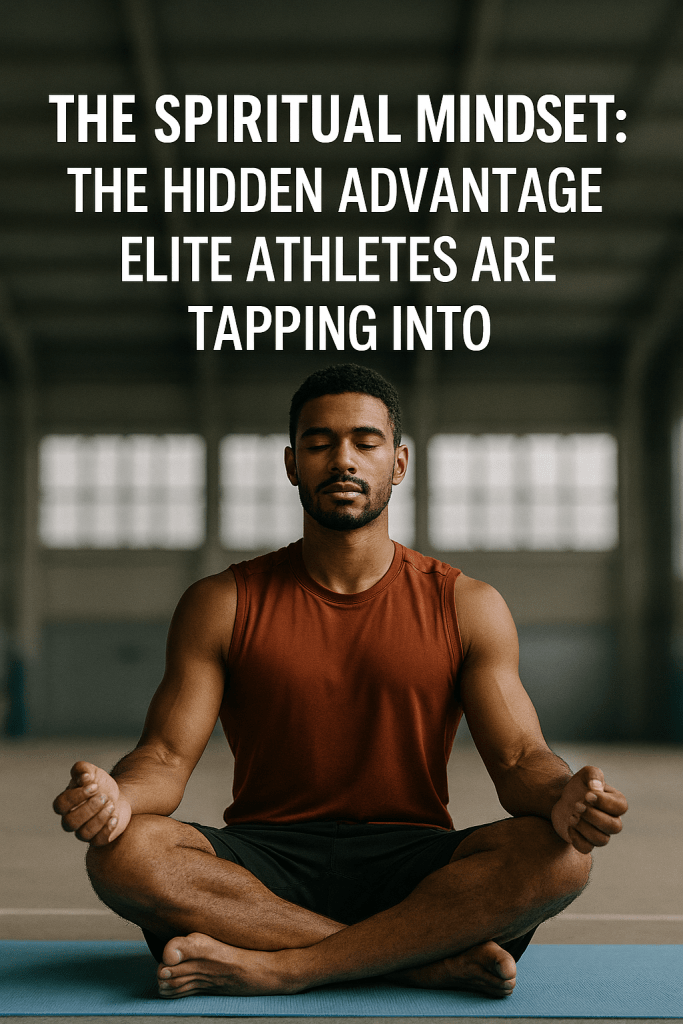
In the world of high‑performance sports, athletes spend countless hours training their bodies, sharpening their skills, and studying their opponents. But the ones who rise above the noise — the ones who play with clarity, purpose, and unshakeable confidence — often have something deeper guiding them.
They compete with a spiritual mindset.
This isn’t about religion. It’s about connection. It’s about grounding. It’s about tapping into something bigger than the scoreboard so pressure doesn’t own you, fear doesn’t define you, and success doesn’t consume you.
A spiritual mindset gives athletes a different kind of edge — one rooted in presence, identity, and inner peace.
Why Spirituality Matters in Sports
Athletes face intense emotional landscapes: expectations, criticism, self‑doubt, and the constant demand to perform. A spiritual mindset helps them navigate these challenges by offering:
1. A Center Point When Pressure Peaks
When everything around you feels chaotic — the crowd, the stakes, the moment — spirituality brings you back to your breath, your body, and your intention.
It reminds you that you’re more than the moment.
2. Identity Beyond the Jersey
Many athletes struggle with the question: Who am I without my sport?
A spiritual mindset anchors identity in values, purpose, and character — not stats or status.
3. Emotional Regulation and Inner Calm
Spiritual practices like meditation, gratitude, visualization, and mindful breathing help athletes stay grounded, even when emotions run high.
4. A Sense of Meaning in the Grind
Training becomes more than reps.
Recovery becomes more than rest.
Competition becomes more than winning.
Spirituality turns the journey into something sacred — a path of growth, not just achievement.
What a Spiritual Mindset Looks Like in Practice
A spiritual athlete isn’t floating around in a zen bubble. They’re intentional. They’re self‑aware. They’re connected to something deeper than performance.
Here are the habits that shape that mindset:
1. Daily Grounding Rituals
- Morning breathwork
- Gratitude journaling
- A quiet moment before stepping onto the field
These rituals create emotional stability and mental clarity.
2. Trusting the Process
Instead of obsessing over outcomes, spiritual athletes focus on alignment:
Am I showing up with integrity? Am I honoring my preparation? Am I connected to my purpose?
3. Letting Go of What They Can’t Control
Referees. Weather. Mistakes. Opinions.
A spiritual mindset teaches athletes to release what isn’t theirs to carry.
4. Playing With Presence
The best athletes aren’t thinking — they’re flowing.
Spirituality strengthens that flow state by quieting the noise and amplifying intuition.
The Competitive Advantage No One Talks About
When an athlete is spiritually grounded, they become:
- Harder to rattle
- Quicker to recover emotionally
- More confident in their identity
- More connected to their team
- More resilient through adversity
They stop chasing validation and start competing from a place of wholeness.
That’s when performance becomes art.
A Message to Athletes: Your Spirit Is Part of Your Game
Your mindset isn’t just mental — it’s spiritual.
Your confidence isn’t just skill — it’s connection.
Your resilience isn’t just toughness — it’s trust.
When you strengthen your spirit, you strengthen your game.
And when you compete from a grounded, aligned, spiritually centered place, you don’t just play better — you become better.
One rep at a time.
One breath at a time.
One moment at a time.
Spiritual mindset for athletes, athlete mental health, emotional intelligence in sports, mindfulness for athletes, athlete identity beyond sport, performance psychology, grounded confidence, breathwork for athletes, meditation in sports, elite athlete mindset, resilience training, inner peace for athletes, sports spirituality, athlete self-awareness, mental edge coaching, mindset coaching for athletes, holistic athlete development, sports and spirituality, athlete personal growth, competitive mindset mastery, athletic emotional regulation, sports performance mindset, mental toughness with compassion, spiritual performance edge, coaching emotional intelligence, athlete empowerment strategies, sports psychology tools, athlete journaling practices, visualization for athletes, gratitude mindset in sports, self-trust in competition, flow state training, purpose-driven athlete, high-performance mindset coaching, mental clarity for athletes, spiritual growth in athletics, athlete mindset transformation, confidence coaching for athletes, identity coaching for sports professionals, mental edge blog, Reverend Rob Coaching, Pathfinder Coaching, The Mental Edge Coach

Leave a Reply