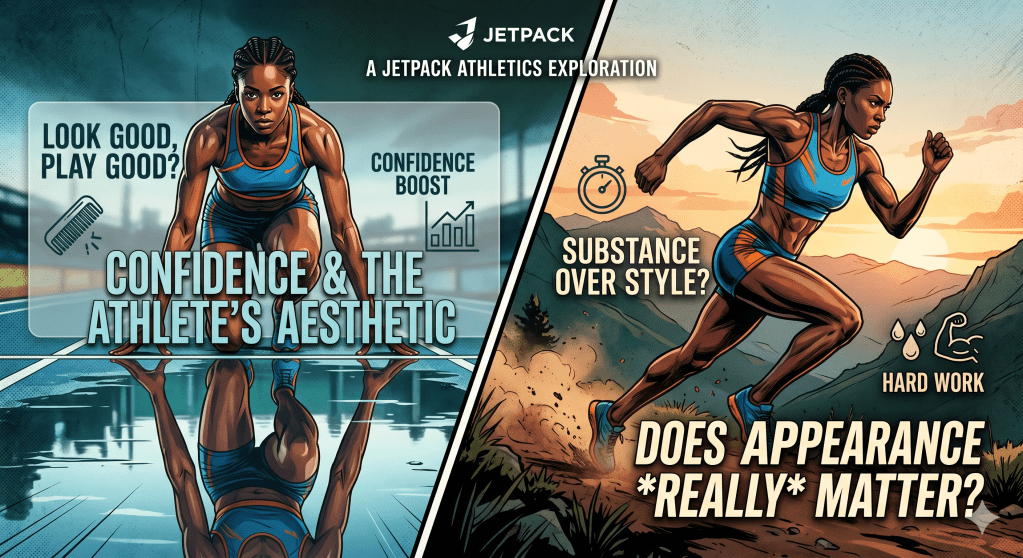
We’ve all heard the old-school locker room mantra: “If you look good, you feel good. If you feel good, you play good.” In the modern era of sports—where tunnel walks are fashion runways and custom cleats are high art—the link between an athlete’s personal appearance and their performance is more scrutinized than ever. But is there actual substance behind the style, or is it all just vanity?
The “Why”: Does Appearance Actually Matter?
It’s easy to dismiss grooming or gear as “surface-level,” but for an athlete, appearance often serves as a psychological primer.
- The Enclothed Cognition Effect: This is a psychological phenomenon where the clothes we wear trigger mental processes. Putting on a crisp, tailored uniform or a specific pair of “game day” shoes can literally flip a switch in the brain, signaling that it’s time to shift from “civilian mode” to “warrior mode.”
- Perception and Intimidation: Sports are as much a mental game as a physical one. Presenting a polished, professional, or even “sharp” image can project a sense of discipline and readiness to opponents.
- Self-Efficacy: When an athlete feels they look the part, their self-efficacy—the belief in one’s ability to succeed—often sees a measurable bump. Confidence is the ultimate performance enhancer.
The “How”: Mastering the Aesthetic of Performance
Achieving a confidence-boosting look isn’t about wearing the most expensive brands; it’s about intentionality.
- Functional Grooming: It’s hard to focus on a jump shot if your hair is in your eyes or your skin is irritated from poor shaving habits. Streamlining grooming routines ensures that physical distractions are zeroed out.
- The Ritual of Preparation: The act of getting ready—braiding hair, taping wrists, or even choosing a specific pre-game suit—is a ritual. Rituals lower anxiety and provide a sense of control in high-pressure environments.
- Personal Branding: In today’s NIL (Name, Image, and Likeness) landscape, appearance is a tool for storytelling. An athlete’s style is a non-verbal way to communicate their personality to fans and recruiters alike.
The Counter-Point: Why Appearance Doesn’t Matter
While style can provide a mental edge, it’s vital to distinguish between confidence and distraction.
| Why It Matters | Why It Doesn’t |
| Boosts “Game Day” mental state | Cannot replace physical repetitions |
| Reduces performance anxiety via ritual | High-maintenance looks can become a distraction |
| Projects discipline to others | Does not improve raw athletic metrics (speed, strength) |
| Enhances personal branding | Can lead to “style over substance” criticism |
The Reality Check: A fresh haircut won’t fix a bad shooting form, and the most expensive kit in the world won’t give you a better vertical. Confidence derived from appearance is a supplement, not a substitute for hard work.
Finding the Balance
The goal for any athlete is to use their personal appearance as a launchpad, not a crutch.
If spending an extra ten minutes on your appearance makes you feel 10% more “locked in,” then it is a valid part of your performance toolkit. However, the moment the concern for how you look outweighs the focus on how you play, the “look good, play good” philosophy starts to work against you.
The Bottom Line: Wear the gear, master the grooming, and enjoy the swagger—but remember that at the end of the day, the scoreboard only tracks the points, not the outfit.
What’s one part of your “game day” look that makes you feel unstoppable when you step onto the field?

Leave a Reply